


Tuberculosis-causing mycobacteria stiffen cell membranes to keep away from destruction, however the discovery opens new pathways for therapy.
RT’s Three Key Takeaways:
- Membrane-Stiffening Survival Technique: Tuberculosis-causing micro organism launch lipid-filled extracellular vesicles that stiffen immune cell membranes, stopping phagosomes from fusing with lysosomes and permitting the micro organism to outlive inside cells.
- Lipid-Pushed Immune Dysfunction: The research reveals a novel lipid-centric mechanism of immune evasion, displaying that bacterial lipids alone can bodily alter host cell membranes and weaken immune defenses, even in close by uninfected cells.
- New Therapeutic Targets: By figuring out vesicle manufacturing and membrane stiffening as key survival instruments, the findings recommend new therapy methods geared toward blocking these processes to assist immune cells successfully get rid of an infection.
Scientists have uncovered a chic biophysical trick that tuberculosis-causing micro organism use to outlive inside human cells, a discovery that would result in new methods for preventing one of many world’s deadliest infectious ailments.
Tuberculosis kills greater than one million individuals annually and stays a significant public well being disaster, significantly in Asia, Africa and Latin America. The illness is attributable to mycobacteria, which have developed refined methods to hijack human immune cells and keep away from being destroyed.

“Tuberculosis is rampant in India,” stated Ayush Panda, previously a graduate pupil within the laboratory of Mohammed Saleem on the Nationwide Institute of Science Training and Analysis, India. “I grew up in a state the place tuberculosis outbreaks are a significant downside, and I used to be at all times interested by how these ailments unfold. That’s what drew me to this analysis.”
Mycobacteria have developed refined methods to hijack human immune cells and keep away from being destroyed. Particularly, they stiffen the interior membrane to forestall the digestive enzymes inside lysosomes from destroying the micro organism.
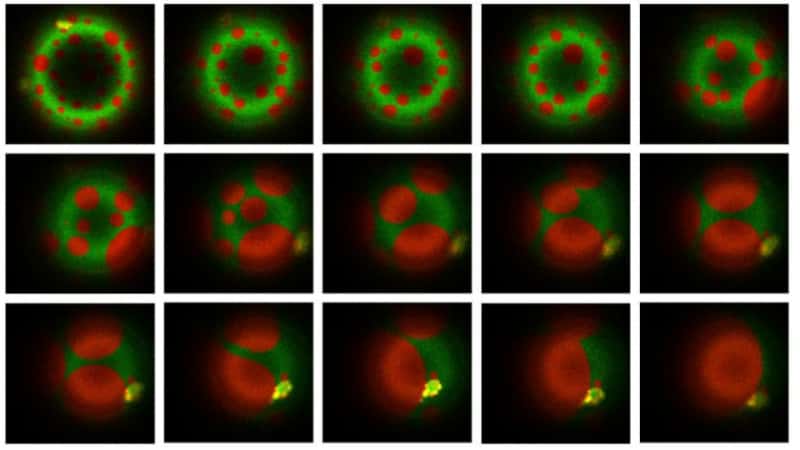
The analysis, which will likely be introduced on the seventieth Biophysical Society Annual Assembly in San Francisco from February 21–25, 2026, and was just lately posted on bioRxiv, reveals that mycobacteria launch tiny packages referred to as extracellular vesicles that fuse with the membranes of immune cells. These vesicles include specialised lipids—fatty molecules—that make the cell membrane extra inflexible.
Usually, when our immune cells engulf dangerous micro organism, they entice them in a compartment referred to as a phagosome, which then fuses with one other compartment referred to as a lysosome. Lysosomes include digestive enzymes that break down and destroy the micro organism. Nonetheless, the crew found that by stiffening the phagosome membrane, mycobacteria stop this fusion from occurring—primarily constructing a protecting bunker round themselves inside our personal cells.
“If the membrane turns into extra inflexible, it turns into a lot tougher for the phagosome to fuse with the lysosome,” Panda defined. “It’s a chic biophysical mechanism: the micro organism rework the membrane structure to flee the very course of that may have killed them.” The researchers additionally discovered that these vesicles usually are not restricted to contaminated cells. They will have an effect on close by immune cells, weakening them even earlier than they arrive into contact with the micro organism.
What makes this discovery significantly important is that it represents a wholly new means of understanding how mycobacteria survive. Earlier analysis targeted totally on proteins that the micro organism disrupt. This research takes a lipid-centric method, displaying that the introduction of bacterial lipids into host cell membranes is enough to induce immune dysfunction.
“Essentially the most stunning discovering was after we launched mycobacterial lipids into membranes that mimic the host phagosome, we noticed exceptional bodily adjustments—the membrane properties have been utterly altered,” Panda stated.
The researchers additionally noticed related extracellular vesicle-mediated membrane results in Klebsiella pneumoniae and Staphylococcus aureus, suggesting an evolutionarily conserved technique amongst pathogens. The findings open a number of promising avenues for creating new therapies. Researchers might doubtlessly goal the proteins concerned within the manufacturing of those bacterial vesicles or discover methods to counteract the membrane-stiffening results.
“Now that we perceive how the micro organism defend themselves, we will begin searching for methods to cease them,” Panda stated. “If we will block the micro organism from stiffening these membranes, our immune cells may be capable to do their job and cease the an infection.”